

on WeChat to
follow us

Research
Follow

Address
92 Xidazhi Street, Nangang District, HarbinZipcode
150001Tel
0451-86413909,86402590 10
10 Recently, the research team led by Professors Chen Ruirun and Qin Gang from the Key Laboratory of Precision Hot Forming, School of Materials Science and Engineering, has made significant progress in the field of high-temperature strengthening of lightweight refractory medium/high-entropy alloys. The related findings were published in Acta Materialia, a top-tier journal in metallurgy and materials, under the title: “Suppression of dynamic recovery via localized solute pinning for superior high-temperature strength in a lightweight refractory medium-entropy alloy.”
With the growing demand for structural components serving under extreme thermal conditions in aerospace, power equipment, and related fields, there is an urgent need for lightweight heat-resistant materials that combine low density with excellent high-temperature strength. However, achieving a synergistic balance between high-temperature strength and ductility in multi‑principal‑element refractory medium/high‑entropy alloys remains a key challenge. Lightweight refractory medium/high‑entropy alloys, benefiting from a single BCC solid-solution structure and low density, show great application potential. Nevertheless, single‑phase BCC lightweight refractory alloys generally suffer from a drastic drop in strength at elevated temperatures due to dynamic recovery and recrystallization, leading to severely insufficient load‑bearing capacity under high‑temperature conditions.
To address this bottleneck, the research team innovatively proposed a second‑phase‑free high‑temperature stabilization strategy, aiming to synergistically enhance both high‑temperature strength and ductility. This strategy employs Nb content as a variable in Ti‑Zr‑V‑Nb lightweight refractory medium‑entropy alloys. High Nb addition induces Nb‑rich nanoclusters that form localized solute atmospheres at dislocation cores to impede dislocation climb, and also constructs quasi‑planar enrichment zones at subgrain boundaries to block boundary migration, thereby achieving dual suppression of dynamic recovery and recrystallization (Figure 1). This design not only avoids the room‑temperature brittleness caused by intermetallic compound precipitation but also ensures microstructural stability at high temperatures. Furthermore, through multi‑scale characterization, interfering factors such as grain size and static lattice distortion were quantitatively excluded, further clarifying the critical role of solute‑defect dynamic interactions. Benefiting from the above compositional design, the developed Nb25 alloy achieved a 24% increase in tensile strength at 800 °C compared to the reference group, while maintaining a fracture strain of 29.7%, with a pure BCC single‑phase structure throughout the process (Figure 2). Based on these performance advantages, this alloy provides a novel pathway for the compositional design of lightweight heat‑resistant components for extreme thermal conditions, holding significant application potential in aerospace, power equipment, and other fields.
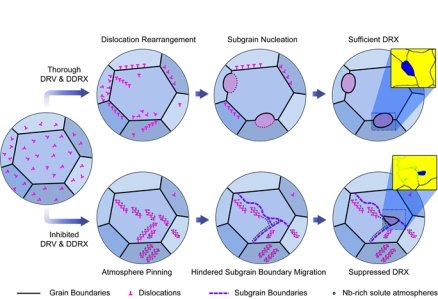
Figure 1 Schematic diagram of the alloy’s high‑temperature deformation mechanism.
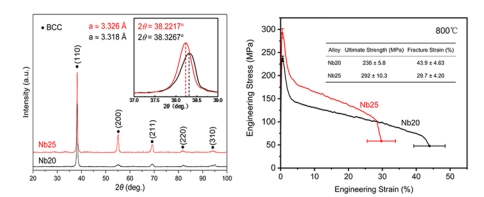
Figure 2 Phase composition and high‑temperature mechanical properties of the alloy.
This study highlights the key role of solute‑defect dynamic interactions in the design of lightweight high‑temperature alloys and offers a precipitation‑free strengthening strategy for improving the high‑temperature service stability of refractory alloys. This achievement opens up new avenues for lightweight heat‑resistant structural parts operating under coupled extreme thermal‑mechanical conditions.
The first author of this work is Chen Yao, a Ph.D. student at the School of Materials Science and Engineering, with Professors Chen Ruirun and Qin Gang as co‑corresponding authors.
This research was supported by the National Outstanding Youth Science Fund Project, the General Program of the National Natural Science Foundation of China, and the “AI + Materials” Precision Cultivation Project of the School of Materials Science and Engineering.
Paper link: https://doi.org/10.1016/j.actamat.2026.122459