
on WeChat to
follow us
Research
Follow

Address
92 Xidazhi Street, Nangang District, HarbinZipcode
150001Tel
0451-86413909,86402590 77
77 Time flies, and our strides are resolute. The year 2025 marks the 105th anniversary of Harbin Institute of Technology (HIT) and the fifth anniversary of receiving President Xi Jinping's congratulatory letter on HIT's centennial. The School of Materials Science and Engineering across all three campuses of HIT has consistently anchored itself to national strategic needs and targeted cutting-edge disciplinary frontiers, continuously advancing the integrated development of materials science. Through Party-building leadership, team development, fundamental research, collaborative scientific breakthroughs, resource sharing, joint talent cultivation, and internationalization efforts, it has collectively written a compelling chapter of high-quality development.
Today, let us revisit the Top Ten News Stories of the Year and relive those shining moments that bear the mark of materials scientists—
PART-1
Hardcore Leadership in Party Building and Ideological Education,Comprehensive Demonstration of Benchmark Effects.
The Party Committee of the School of Materials Science and Engineering consciously aligns with the mission of being the “premier aerospace institution” and a “national team among universities.” It takes the lead in key areas of development, rallying exceptional momentum guided by the spirit of congratulatory letters. Sixteen faculty members holding provincial-level or higher talent titles were selected and appointed as Party branch secretaries and committee members, bolstering the university's cultivation of outstanding talents and development of national strategic assets. Faculty members received honors as the university's Top Ten Outstanding Communist Party Members and Top Ten Outstanding Party Affairs Workers. The Weihai Campus Materials Science and Engineering College Party Committee was recognized as an Advanced Grassroots Party Organization. Over 30 individuals were featured in mainstream media outlets such as People's Daily.
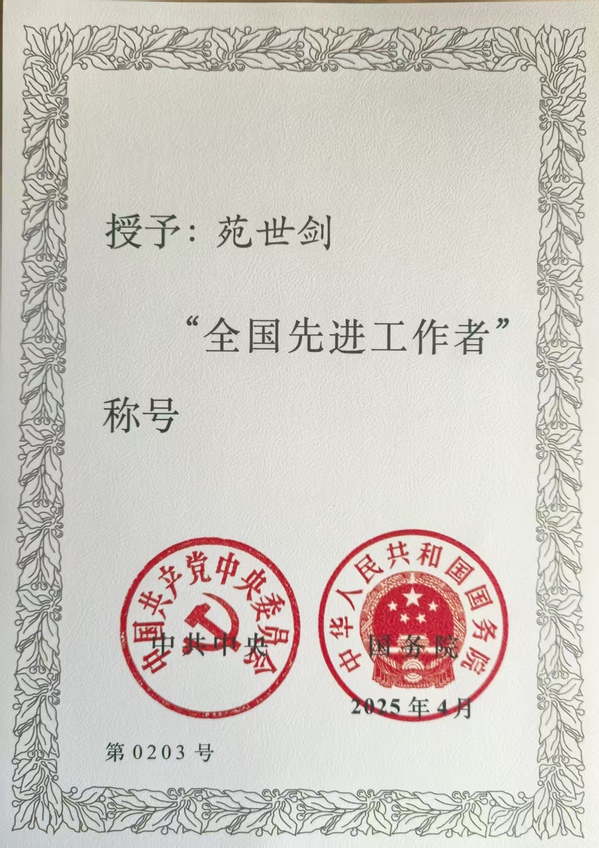
Yuan Shijian: National Advanced Worker
Wang Ruowei: Outstanding Award, China Association for Science and Technology (CAST) Science and Technology Award
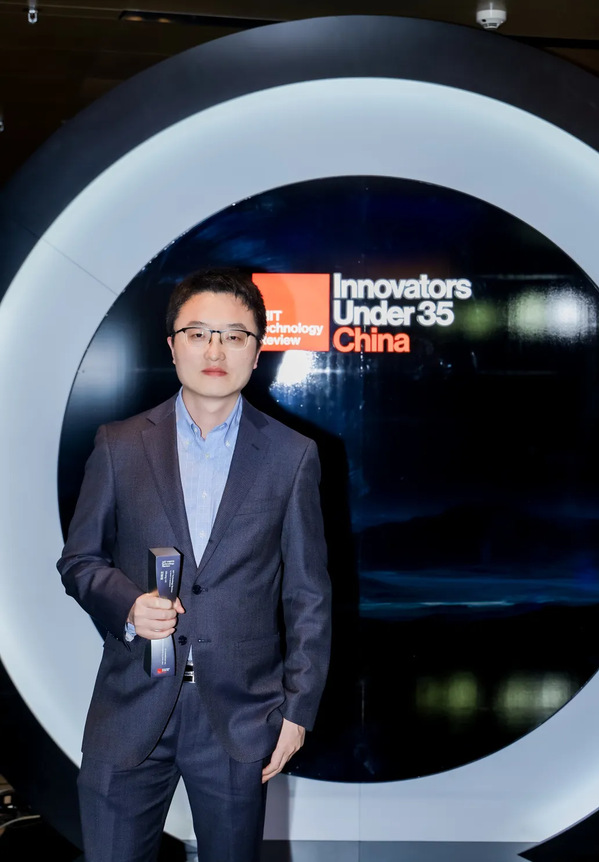
Liu Zihang: Selected for MIT's 35 Innovators Under 35 in Card Technology
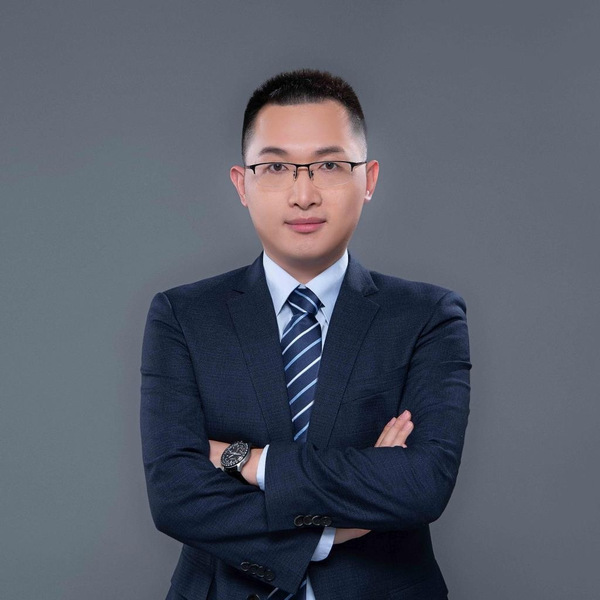
Mao Jun: Youth Award, Ministry of Education Outstanding Scientific Research Achievement Award
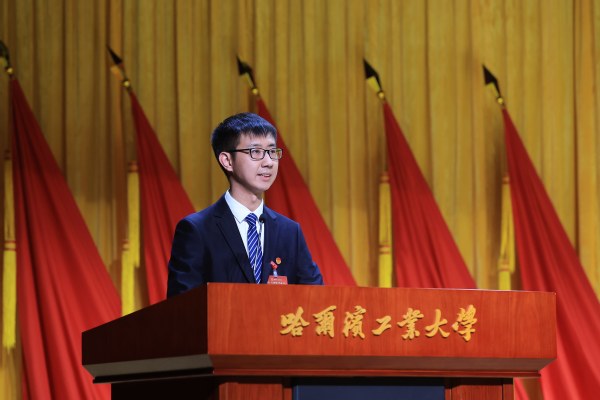
Jia Zhanhua: Elected Standing Executive Chairperson, All-China Students' Fed
PART 2
Breakthrough in Academician Selection,New Heights in Talent Development.
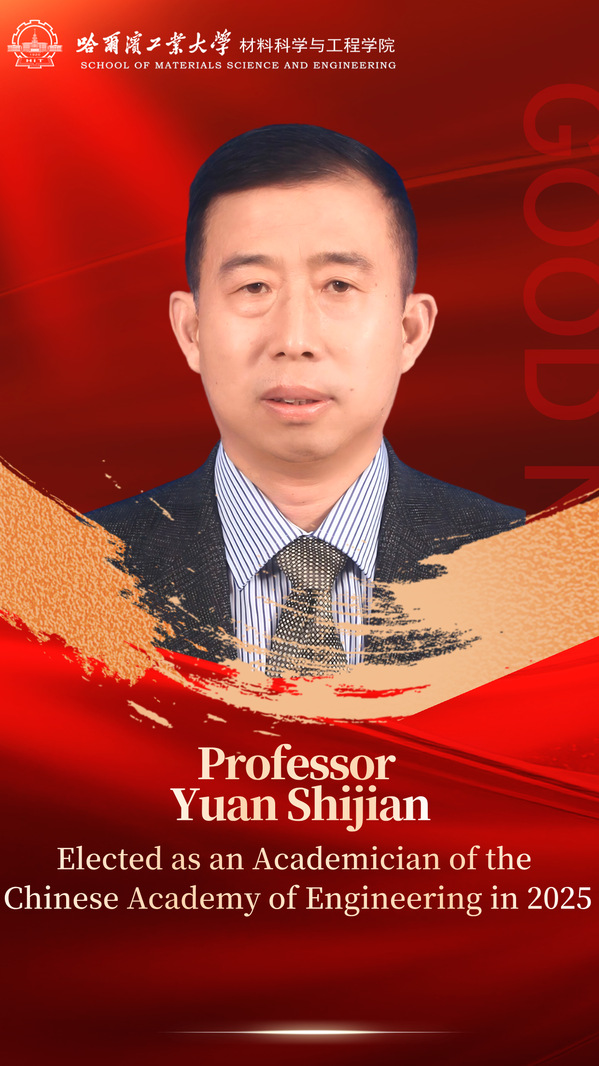
Professor Yuan Shijian was elected as an Academician of the Chinese Academy of Engineering, and alumnus Researcher Chen Xiaolong was elected as an Academician of the Chinese Academy of Sciences. The number of talents cultivated by the School of Materials Science and Engineering at Harbin Institute of Technology who have been recognized as academicians of the two academies has now risen to 23! Professor Liu Sheng, an Academician of the Chinese Academy of Sciences, has been appointed as a part-time doctoral supervisor, accelerating the formation of a high-level talent echelon.
PART-3
Leapfrog Growth in National-Level Talent Recruitment and Cultivation,Taking the Lead in Team Development.
By establishing a collaborative innovation system, the School has self-funded the establishment of the AI Materials Science Center, launched internal tackling key challenges initiatives, advanced the AI + Materials research efforts of young faculty members, and supported newly recruited talents in launching their research projects. In 2025, 20 individuals were recognized as national-level talents, achieving full coverage across six categories of young talent for the first time. The total number of national-level talents has now exceeded 80. Through targeted recruitment initiatives in the UK, Japan, and other regions, and by advancing a rapid-response mechanism, 10 outstanding domestic and international talents were successfully recruited, continuously optimizing the talent structure.
PART-4
Significant Leap in Basic Research,Breakthrough Achieved in National Science and Technology Awards.
Providing full-process support for precise applications across all research projects, we secured approval for 66 National Natural Science Foundation projects, including 6 key projects. Professor Chen Zuhuang and Associate Professor Guo Fengkai received support from the NSFC's Young Scientist Fund A and B programs, respectively. Professor Chen Ruirun's team passed the initial national review for the Second Prize of the National Science and Technology Progress Award. Professor Song Xiaoguo, as the second contributor, passed the initial national review for the Second Prize of the National Science and Technology Progress Award. Professor Shan Debin and four other faculty members led teams to win five provincial/ministerial-level first prizes.
PART 5
Hardcore Major Projects Take Root,Research Funding Reaches New Heights.
By supporting and guiding faculty members in exploring new research frontiers, the School has achieved remarkable successes in securing major projects. It has taken the lead in acquiring nine new national major projects or research initiatives (with allocated funds of ≥10 million yuan each). Notably, the major project led by Professor Li Xingji, with a total funding of over 167 million yuan, has become the School’s first benchmark project exceeding 100 million yuan. The total recognized research funding across the School of Materials Science and Engineering in the three campuses has surpassed 670 million yuan. Following its first breakthrough of exceeding 400 million yuan in 2024, the School’s main campus achieved another milestone in 2025, securing 549 million yuan in research funding—a year-on-year increase of 38.29%.
PART 6
Substantial Improvement in Both Quantity and Quality of High-Level Papers,Expansion of the Roster of Top Scholars.
Through focused cultivation and promotion of innovation, academic achievements have blossomed brilliantly. In 2025, the School of Materials Science and Engineering across the three campuses published over 1,000 SCI papers in high-level journals, including flagship journals and their subsidiary publications, as first affiliation—a 12.1% increase compared to the same period last year. Among these, 5 papers were selected as ESI Hot Papers, and 20 as ESI Highly Cited Papers. Through deep collaboration with international scholars, 151 high-level joint academic papers were co-published. Additionally, 49 individuals were named to the annual list of the World’s Top 2% Scientists.
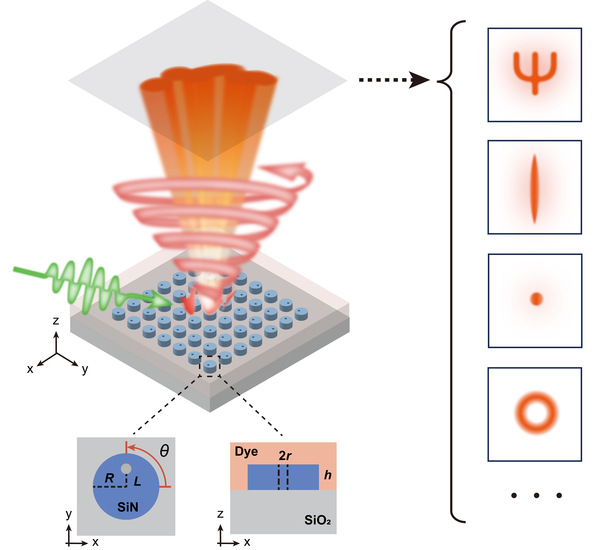
At the Shenzhen campus, the research achievements of Professor Xiao Shumin’s team in the field of laser technology were published in Nature.
PART 7
Building Platforms and Fostering Synergies,Accelerating Achievements in Technology Transfer.
By deepening the integration of industry, academia, and research, we facilitated the successful defense and on-site inspection of the National Key Laboratory of Precision Thermal Forming. The Belt and Road Joint Laboratory passed national acceptance, and we organized over 70 matchmaking and exchange sessions between faculty members and central/state-owned enterprises as well as chain leader enterprises. Five new joint innovation platforms were established.
The total contract value of individual horizontal projects exceeded 50 million yuan for the first time, supporting the development of the Harbin Institute of Technology-Hangzhou Bay (Shaoxing Shangyu) Integrated Circuit Joint Engineering Center. The team led by Professor Li Xingji received full payment of 10 million yuan in patent licensing fees, while the team led by Professor Lu Zhen secured 10 million yuan for a major technology transfer project in Heilongjiang Province.
At the Shenzhen campus, SoliTech, a company founded based on the achievements of Professor Ci Lijie, completed over 100 million yuan in Series A financing. Meanwhile, Weichu New Materials, established from the research outcomes of Professor Qiu Yejun, achieved a post-investment valuation of 600 million yuan. These accomplishments mark the pressing of the fast-forward button for the transformation of scientific and technological achievements.
PART 8
Leading the Way in Disciplinary Excellence,Academic Gatherings Showcase Commitment.
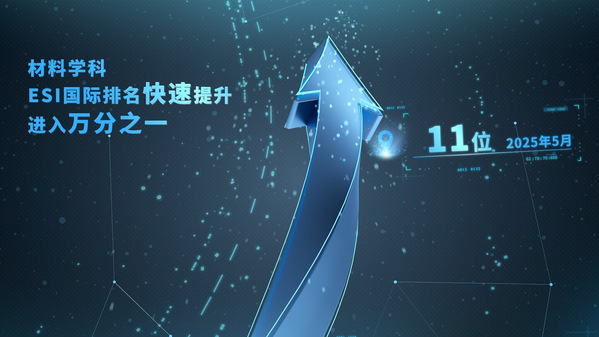
The university successfully hosted the Forum on Integrated Development of Materials Disciplines Across Three Campuses, fostering a cross-campus disciplinary ecosystem characterized by mutual integration, communication, and advancement. This collaborative effort propelled the materials discipline to new heights in international rankings:
- ESI rankings solidified within the top 0.01% globally, climbing to 11th place;- QS World University Rankings advanced to 46th position; U.S. News ranking rose to 24th, while the Shanghai Ranking surged 16 places to 23rd, solidifying its position among the world's foremost institutions.
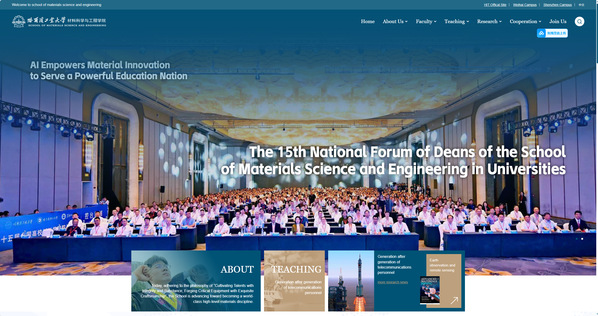
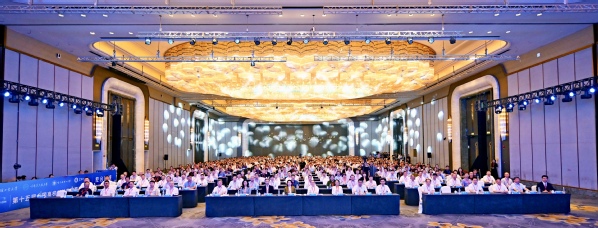
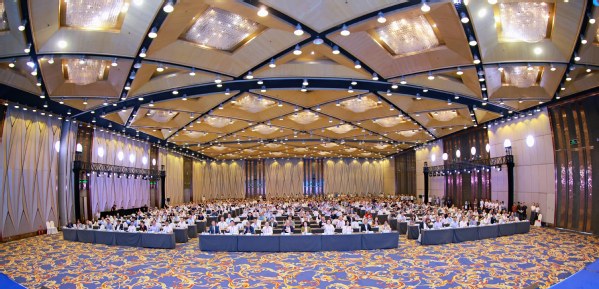
High-level academic conferences were consecutively hosted, including the “15th National Forum of Deans of Materials Science and Engineering Colleges” and the 15th Forum of Outstanding Scholars in Inorganic Non-metallic Materials Discipline, attracting over 30 academicians and more than 2,000 experts from 230 universities, research institutes, and enterprises. These events fostered platforms for exchange and collaboration, fully demonstrating the discipline's leadership and commitment as a world-class field.
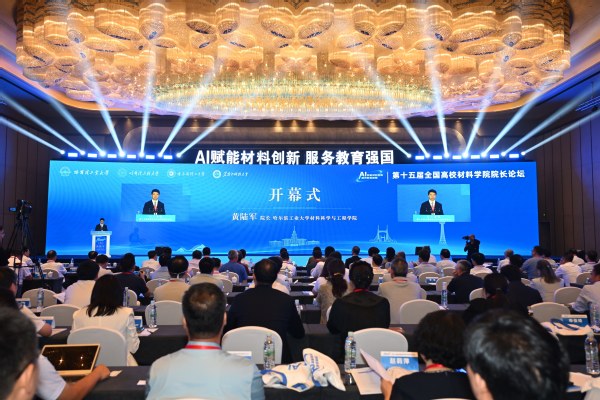
15th National Forum of Deans of Materials Colleges
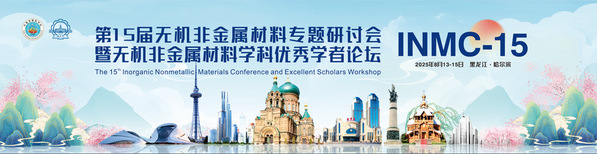
15th Forum of Outstanding Scholars in Inorganic Non-metallic Materials Discipline
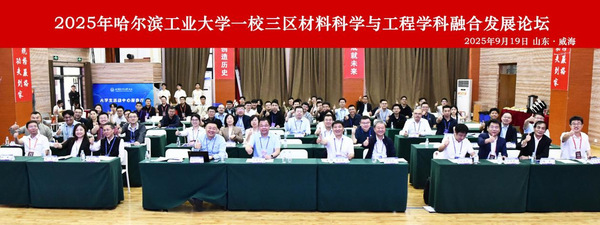
Forum on Integrated Development of Materials Science and Engineering Across Three Campuses
PART 9
Outstanding Talent Cultivation: A Dual Harvest in Enrollment and Further Education
Notable Achievements in Curriculum and Textbook Development:
The School added 6 more national first-class undergraduate courses (bringing the total to 9 out of the university’s 33) and published 13 textbooks and academic monographs. It secured approval for 5 provincial 14th Five-Year Plan undergraduate textbooks, 11 digital textbooks, 2 provincial-level high-quality graduate courses, and 1 provincial outstanding undergraduate textbook award. Faculty members from the School of Materials Science and Engineering across the three campuses took the lead in securing 7 provincial teaching achievement awards.
Impressive Accomplishments in Student Development:
Eight doctoral students were approved for the National Natural Science Foundation’s Young Student Basic Research Projects. In discipline competitions, they shone brightly, winning 108 national-level awards and 667 provincial/ministerial-level awards. This includes 1 championship and 1 first prize in the Challenge Cup special competition, as well as 3 gold medals and 5 silver medals in the China International College Students Innovation Competition.
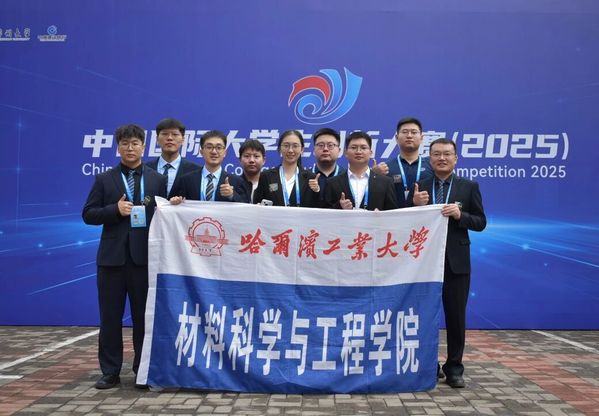
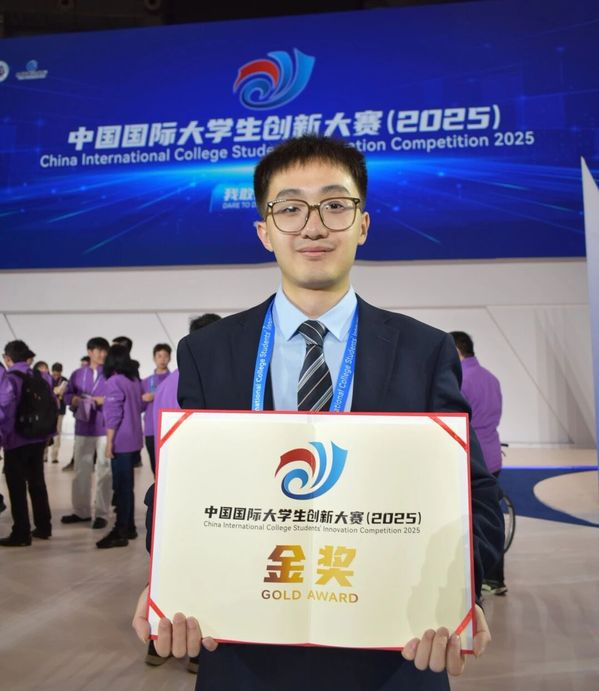
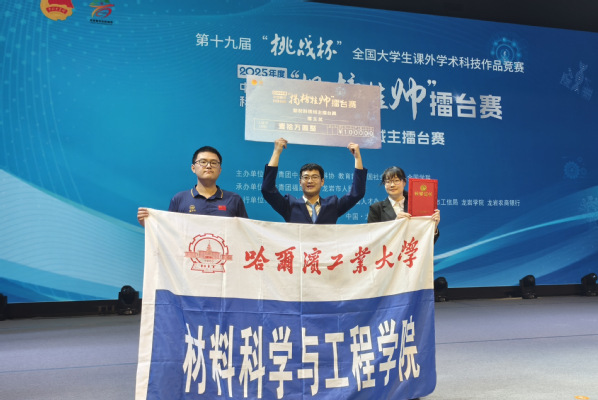
National-level awards: 108 Provincial/ministerial-level awards: 667
Highlights in Enrollment:
The School successfully facilitated the seamless transfer of the inaugural Weihai 2+2 Top Talent Class. The further education rate for the Class of 2025 undergraduates exceeded 80% for the first time, reaching an impressive 81.2%. The School was also honored as a collective unit for outstanding contributions to undergraduate talent selection.
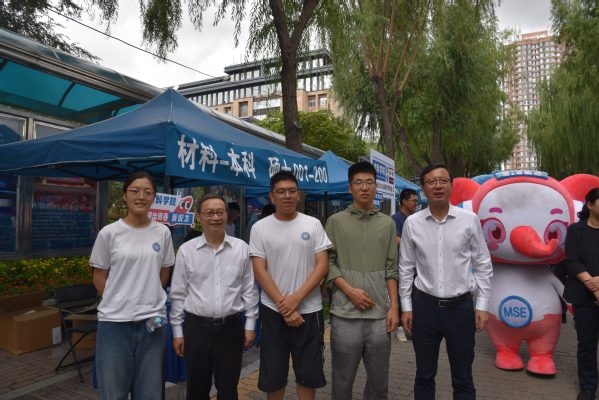
Students from the Weihai 2+2 Top Talent Class who transferred to the main campus pose for a photo with Secretary Chen Jie and President Han Jiecai.
PART 10
Internationalization Strides Forward,A Comprehensive Open-Up Landscape Takes Shape.
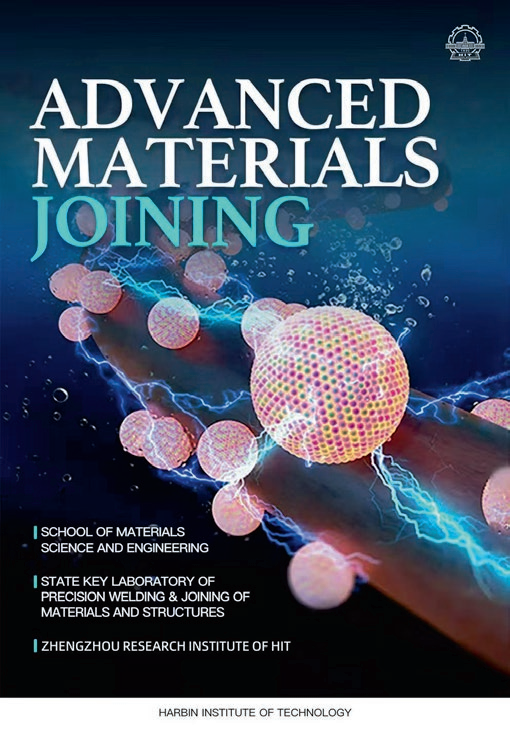
The School's international development has entered a fast track: the English journal Advanced Materials Joiningwas newly launched, and the main campus’s School of Materials Science and Engineering unveiled its all-English webpage. International exchanges for faculty and students achieved a quantitative breakthrough: 164 students participated in overseas exchanges (a threefold increase compared to the previous year), with 48 international students currently enrolled; 99 faculty members engaged in overseas exchanges, and 8 teachers were approved for long-term international collaborative visits (including CSC-sponsored programs and postdoctoral fellowships).
At the Weihai campus, the Sino-Korean cooperative education program (Intelligent Materials and Structures) was successfully launched, enrolling 100 students in its inaugural year.
At the Shenzhen campus, 8 faculty members and 107 students from the School of Materials Science and Engineering visited and exchanged with five top universities in Hong Kong and Macau, achieving both quantitative growth and qualitative improvement in students' overseas exchanges.