
on WeChat to
follow us
Research
Follow

Address
92 Xidazhi Street, Nangang District, HarbinZipcode
150001Tel
0451-86413909,86402590 10
To enhance the quality of talent cultivation in the School, broaden faculty members’ academic horizons, and foster students’ innovative thinking and academic competence, the School of Materials Science and Engineering is launching the 33rd MSE Forum and the 6th Global Materials Pathway Forum in 2026 for all faculty and students.
Time: 9:30, September 9, 2026
Venue: Room 220, Materials Building
Lecturer: Professor Hu Yunxia
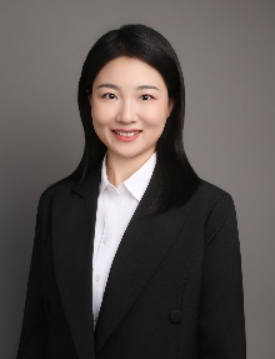
Report Title: Energy-Efficient Sensing-and-Memory Integrated Vision Chips Based on van der Waals Materials
Lecturer Biography:
Hu Yunxia is professor and doctoral supervisor at the School of Optics and Photonics, Beijing Institute of Technology, and a National Young Talent. She received her Bachelor’s degree in Materials Chemistry and Doctoral degree in Materials Physics and Chemistry from Harbin Institute of Technology in 2016 and 2022, respectively. Between 2022 and 2026, she worked as a Postdoctoral Research Fellow at the Hong Kong Polytechnic University and the Hong Kong University of Science and Technology. She joined the School of Optics and Photonics, Beijing Institute of Technology in 2026. Her research focuses on low-dimensional optoelectronic materials and devices. She has published more than 50 SCI papers, including 10 as first or corresponding author in journals such as Advanced Materials and Matter. Her work has received over 3000 non-self citations, with an h-index of 32. She is the recipient of the Hong Kong Jockey Club STEM Early Career Research Fellowship and has been supported by the Young Scientists Fund of the National Natural Science Foundation of China.
Abstract:
As a critical component of artificial intelligence and integrated circuits, vision chips represent a strategically vital field underpinning national security and technological advancement. Conventional silicon-based chips are constrained by the power wall and memory wall originating from the von Neumann architecture, as well as the high rigidity and narrow bandgap of silicon. To address these limitations, the lecturer’s research explores novel semiconductor materials and intelligent vision chips. She has proposed an indium-layer electron injection strategy to reduce the power consumption of van der Waals MoS₂ optical synaptic devices, enabling ultra-low-power hemispherical electronic retinas and overcoming bottlenecks of high power consumption and curved-surface integration. She has developed a new strategy for constructing van der Waals MoTe₂ homojunction arrays via thickness engineering to achieve near-infrared self-powered imaging. A vertical crossbar array based on van der Waals MoTe₂ homojunctions has also been demonstrated, delivering high-performance near-infrared self-powered imaging with tunable atomic-scale channels, thereby resolving the trade-off between device performance and high-density integration for two-dimensional material devices. This session will also cover application tips for universities in Hong Kong and introduce overseas academic research environments, helping students broaden their global horizons and build capabilities for international academic exchange.
Registration Link and QR Code:
Registration Link: https://www.wjx.top/vm/hxQ4neu.aspx