
on WeChat to
follow us
Research
Follow

Address
92 Xidazhi Street, Nangang District, HarbinZipcode
150001Tel
0451-86413909,86402590 11
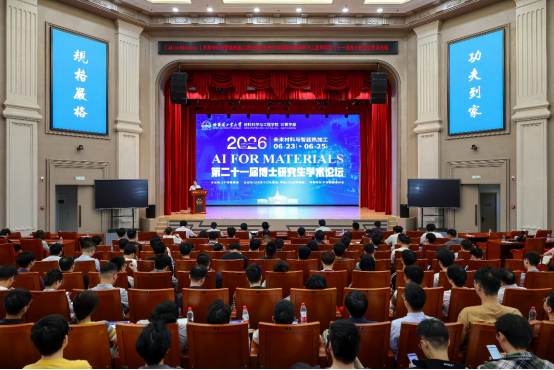
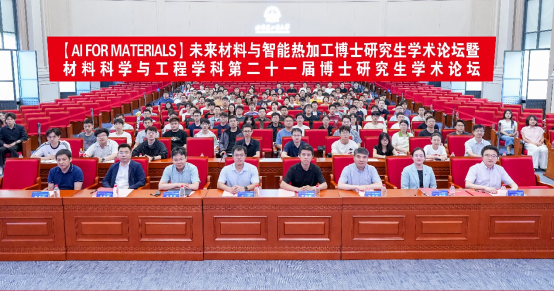
11 In alignment with the thematic framework of the University’s 10th Teaching Festival — “Crafting Excellence with Artisan Spirit, Envisioning the Future through Intelligent Empowerment” — and as a key component of the “Empowering through Synergy, Advancing through Innovation” initiative to integrate scientific research with talent development, the Joint Doctoral Forum on Future Materials and Intelligent Thermal Processing, concurrent with the 21st Doctoral Forum of the Materials Science and Engineering Discipline, was officially inaugurated on June 23 at the Main Hall of the University’s central campus.
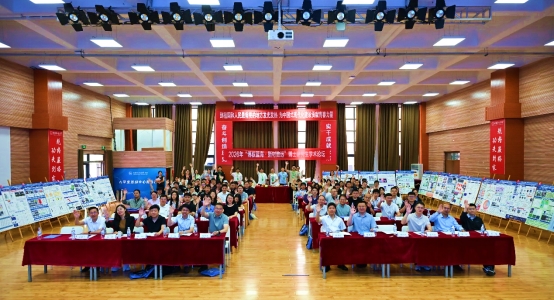
This event marks the seventh iteration of the cross-campus joint doctoral forum, operating under a coordinated “One University, Three Campuses” model. The main campus served as the central hub, while the Weihai Campus hosted an interdisciplinary doctoral forum highlighting marine-related materials research, and the Shenzhen Campus, leveraging its regional advantages, convened a Deans’ Forum of the Guangdong–Hong Kong–Macao Materials Alliance alongside a parallel doctoral sub-forum. Academic exchanges and discussions were carried out sequentially across the three campuses, with a cumulative participation of over 300 faculty members and postgraduate students.
Closely aligned with the national “AI+” strategic initiative and the pressing demand for cultivating talent capable of driving new quality productive forces, the Forum established an interdisciplinary platform bridging artificial intelligence, materials science, and intelligent thermal processing. The plenary session featured opening addresses by Professor Li Jun, Associate Dean of the Graduate School and Director of the Graduate Training Division; Professor Song Xiaoguo, Dean of the School of Materials Science and Engineering; and Ms. Shan Jiyang, Party Secretary of the Faculty of Computing.
Professor Li Jun, framed within the University’s overarching postgraduate education strategy and the Teaching Festival’s AI-empowerment agenda, introduced three major reform measures: optimization of interdisciplinary curricula, strengthening of full-cycle academic supervision for doctoral candidates, and cultivation of versatile top-tier innovators. Dean Song Xiaoguo highlighted the rich heritage of HIT’s materials discipline and the School’s specialized “AI + Materials” incubation program, encouraging doctoral students to leverage national-level research platforms to tackle critical challenges in aerospace and new energy materials. Secretary Shan Jiyang presented the Faculty of Computing’s integrated intelligent computing infrastructure and large-scale algorithmic model resources, reaffirming the Faculty’s commitment to providing comprehensive technical support for AI-driven materials research.
The Forum featured two distinguished national-level senior experts delivering keynote presentations. Professor Xingqiu Chen from the Institute of Metal Research, Chinese Academy of Sciences, presented on “AI-Driven Computational Design of Materials,” covering topics including machine-learned interatomic potentials and data-driven discovery of novel materials. Professor Siqi Shi from Shanghai University delivered a talk entitled “AI for Materials Science: From Fundamental Research to Engineering Deployment,” in which he systematically elucidated the development of an intelligent design platform for energy storage materials and its pathways toward industrial translation.
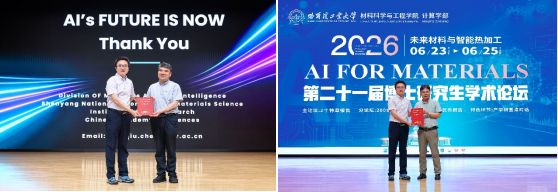
Following the presentations, Professor Huang Lujun, Party Secretary of the School of Materials Science and Engineering, and Professor Liu Zihang, Associate Dean of the School, presented commemorative certificates to the two distinguished speakers. The sessions were met with vibrant scholarly engagement, as faculty and students actively exchanged views on AI-empowered materials innovation.
In addition to the plenary keynote addresses, the Forum concurrently organized seven parallel doctoral sub-fora, featuring over 200 oral presentations by doctoral candidates. Supplementary sessions included an industry–academia–research roundtable dialogue, expert mentoring on research methodologies, and a competitive selection of outstanding academic presentations, with approximately 10% of the reports receiving commendations.
As a flagship academic initiative of the 10th Teaching Festival, this Forum successfully bridged the conventional boundaries between experimental materials science and AI-driven computational disciplines, effectively consolidating interdisciplinary educational and research synergies across the three campuses. Looking forward, the School of Materials Science and Engineering and the Faculty of Computing will continue to build on the Teaching Festival framework, deepening the joint “AI + Advanced Materials” training mechanism. The goal is to guide young doctoral researchers in harnessing intelligent computation to address critical bottlenecks in materials science, thereby contributing high-caliber innovative talent to the University’s strategic pursuit of a position among the world’s top-tier universities.